01
You choose
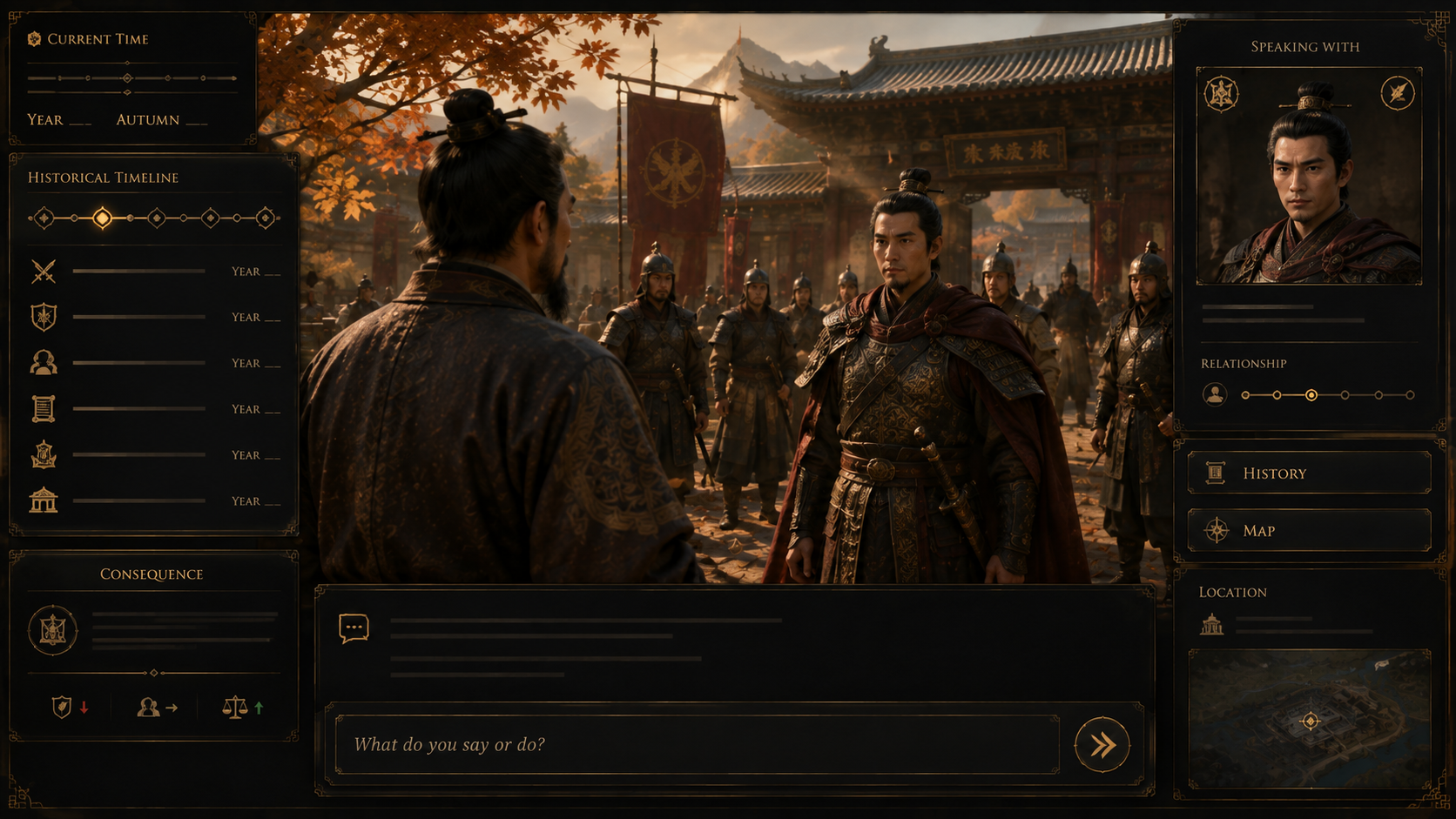
Say what you want to attempt in natural language. Clixy does not choose consequential actions for you.
How Clixy Works
Natural language is the controller. The simulated world decides what is possible and what actually happens.
The Core Loop
01
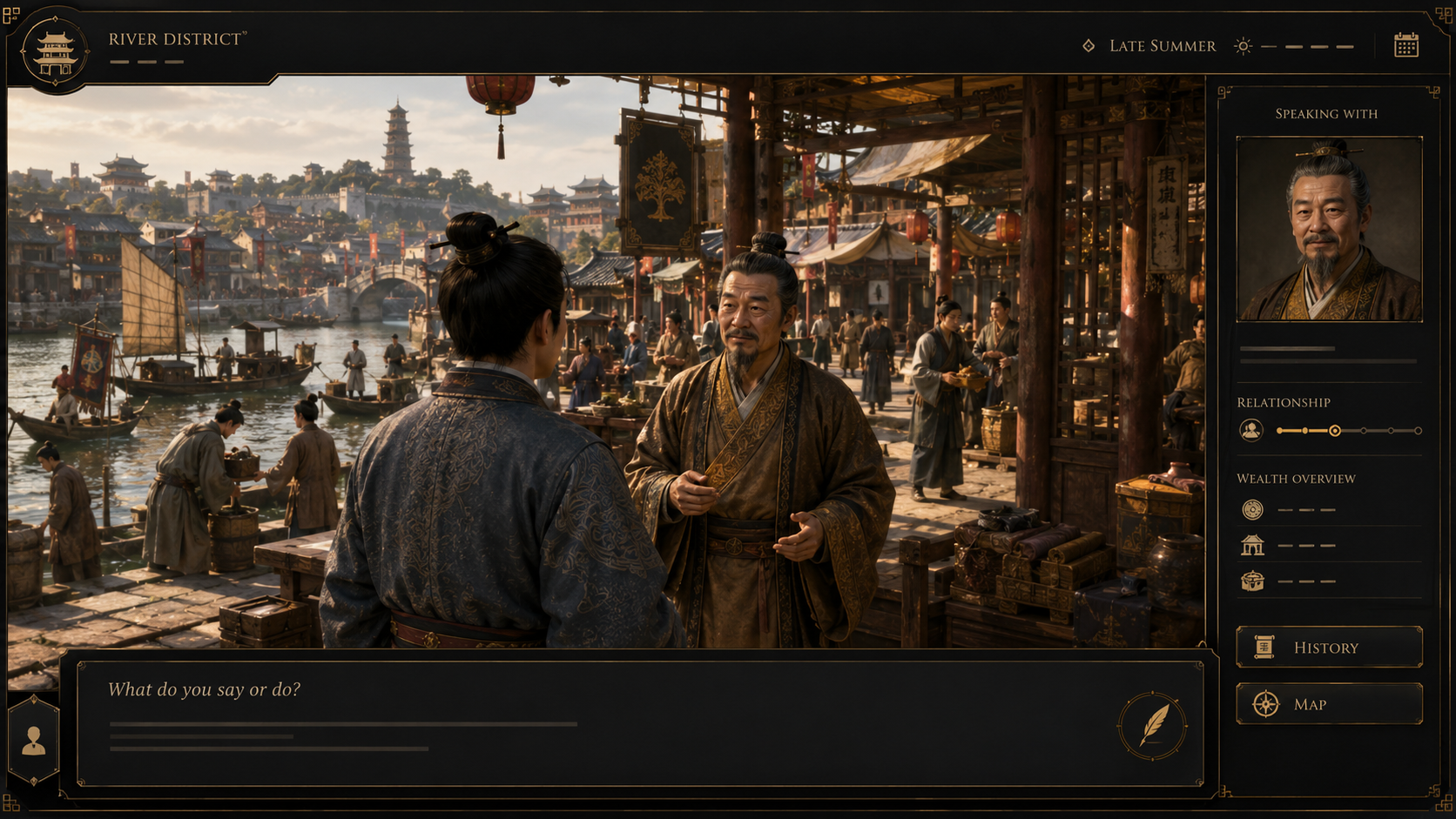
Say what you want to attempt in natural language. Clixy does not choose consequential actions for you.
02
Rules, time, location, resources, authority, relationships, and existing history determine what can actually happen.
03
The result becomes part of the world. People can remember it, institutions can react to it, and years later it can still matter.
History Is State
You refuse a general years earlier. His family remembers. His son grows up, gains office, and later controls something you need. The consequence returns because those people and institutions kept existing.
The world does not remember because a paragraph stayed in context. It remembers because history became world state.
What Can Persist
Clixy is designed around a small set of simulation primitives that can combine differently in every world.
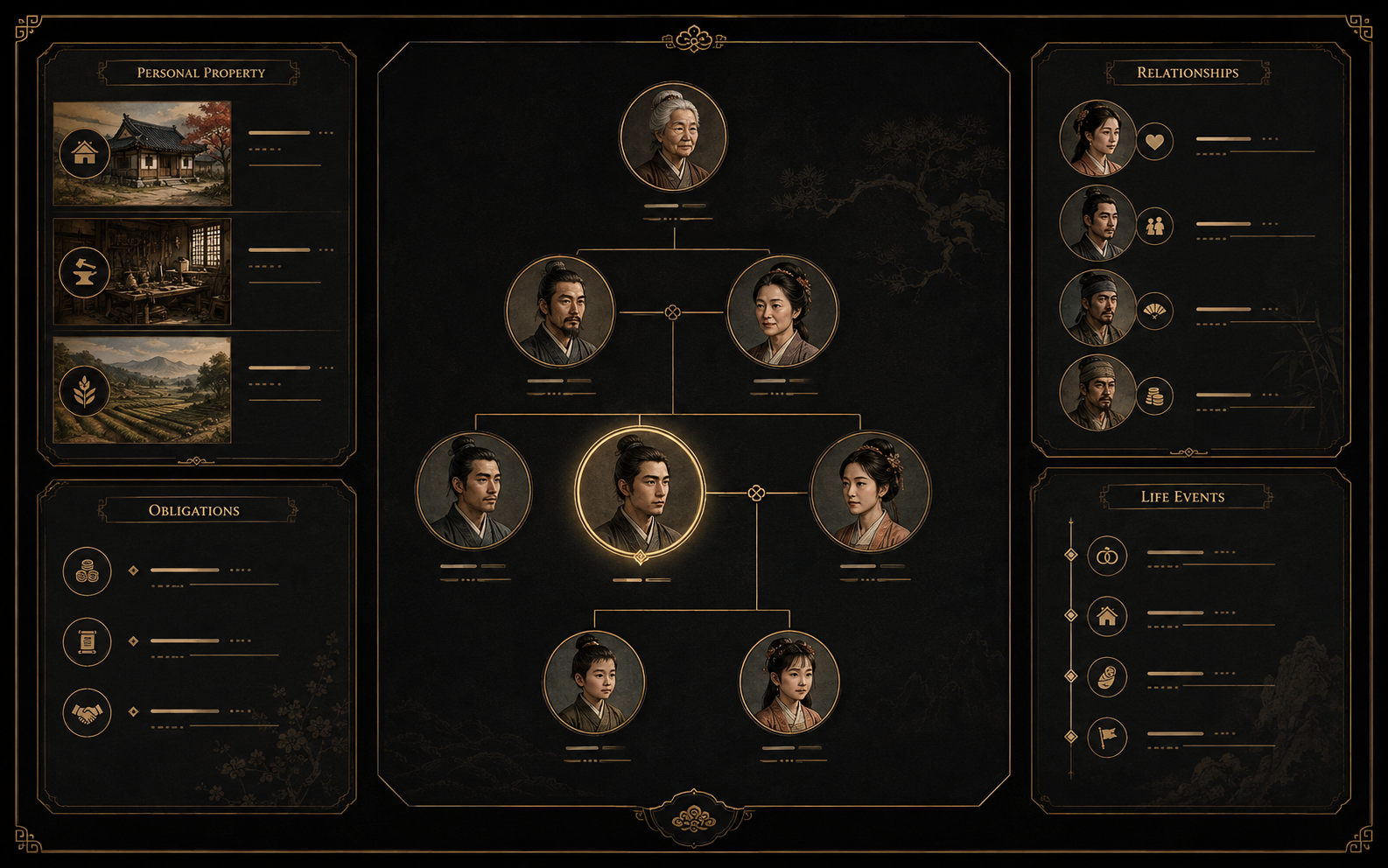
People have locations, goals, relationships, knowledge, possessions, and histories of their own.
Travel, recovery, projects, aging, and events consume actual time.
Money, land, objects, and resources have real ownership and transfers.
Families, companies, armies, governments, and communities can persist beyond a scene.
Characters know what they have reason to know. News, orders, and secrets have to travel.
Events become provenance, reputation, obligation, careers, borders, and consequences.
The Interface Serves the Life
Natural language remains primary. Family, property, relationships, obligations, and history become visible when they help you make a decision, not because Clixy wants to turn your life into a strategy dashboard.
Under the Hood
01
People, possessions, locations, relationships, time, resources, and events that already happened.
02
The rules that change truth: economy, travel, conflict, family, institutions, information, and time.
03
Language interpretation, dialogue, bounded qualitative judgment, and narration.
04
Text first. The same authoritative state can later feed images, maps, voice, 2D, or other clients.
AI can interpret intent, speak for characters, make bounded qualitative judgments, and narrate committed outcomes. It cannot silently create resources, ignore distance or authority, give characters impossible knowledge, or overwrite canonical state.